In responding to the tough choices facing Oregon voters, Prof Thoma recommends that Federal government step in a general liquidity provider for states which cannot adjust budgets on the boundaries.
I want to remind Oregon voters what the payback ratio is for states and federal taxes. The Tax Foundation's recent report shows New Mexico gains $2 in federal spending for each dollar of federal taxes, while Oregon gains $ .94. The more Oregon relies on federal largess, the less their total return.
Oregon voters would be better advised to practice flexibility in state government and avoid making long term labor commitments.
Monday, January 11, 2010

Teens and seniors crowded out of the job market
Political Calculations goes through the analysis. What is happening?
The Wage Quant is too high for teens. When we partially or completely deflate, we have shortened the distribution, fewer intermediate steps in production. Labor classification follows production of goods. So if we measured the teenage wage portion of the wage arrangement, then in a deflated state, teens occupy part of a broader swath of lower skilled workers. In other words, the integer appearing in the Shannon channel exponent has dropped, the degree of Entropy is less. But, fewer firms, each firm a bit larger means that teens get promoted within the firm than in the market. Teens no longer have the teen after school labor market, or summer job market, or holiday market.
So model the labor market as a yield curve, employees moving through the production line. The raw material are young people. When this labor yield deflates, the slight Eigenfunction devoted to teen employment, entry level jobs, disappears.
The Wage Quant is too high for teens. When we partially or completely deflate, we have shortened the distribution, fewer intermediate steps in production. Labor classification follows production of goods. So if we measured the teenage wage portion of the wage arrangement, then in a deflated state, teens occupy part of a broader swath of lower skilled workers. In other words, the integer appearing in the Shannon channel exponent has dropped, the degree of Entropy is less. But, fewer firms, each firm a bit larger means that teens get promoted within the firm than in the market. Teens no longer have the teen after school labor market, or summer job market, or holiday market.
So model the labor market as a yield curve, employees moving through the production line. The raw material are young people. When this labor yield deflates, the slight Eigenfunction devoted to teen employment, entry level jobs, disappears.
Taking a shot at Economic Mumbo Jumbo
John Whitehead inertprets the Treasury decision to increase supply of TIPs notes. He is referring to this WJS article.
My interpretation is that inflation protected investments are becoming more liquid. They are becoming liquid because the lending channel is distorted and the economy is building an inflation protected investment flow, designed to restore balance to the lending channel. I allude to this constantly as the generalized carry trades or Kelly trades.
My interpretation is that inflation protected investments are becoming more liquid. They are becoming liquid because the lending channel is distorted and the economy is building an inflation protected investment flow, designed to restore balance to the lending channel. I allude to this constantly as the generalized carry trades or Kelly trades.
Sunday, January 10, 2010
This about leverage
From Russ Roberts. Of you want to push bad paper, it helps to have an insider in Treasury.
More bailouts on the way
Cris Romer wants to bail out California, and call it a stimulus. ABC has her confession. How many rounds of bailouts will we need? Each bailout insures a compliant Fed. If the Kelly trades continue to inflate they earn more than any gain from consumption; but very fast in the collapse. So Congress pushes the Fed, the Fed creates increasing deeper supply chains for Kelly trade, the most decorrelated assets in far places and future times are traded for dollars. The dollar price of foreign assets, including oil, rises as traders park dollars.
So, a nugget of low entropy, an accommodative Fed, has been captured and coded to the constraint. Precisely what intelligent economies do. Congress will be more directly bound by the oil constraint, and California government will have to reform.
So, a nugget of low entropy, an accommodative Fed, has been captured and coded to the constraint. Precisely what intelligent economies do. Congress will be more directly bound by the oil constraint, and California government will have to reform.
I like President Hoover
I previously preferred Secretary of Commerce Hoover, but am warming up to his work as Pres.
News from the 30s says:
My italics. A little clue about who knew what the automobile was all about. How much of the economy was building roads, gas stations, highways, parking garages, traffic lights and motels? Things don't all arrive at once, and national traffic jams really do cause depressions, as do oil supply adjustments. A fast way to cause a deflation is to raise transaction costs, mainly transportation. Supply chains want to handle more processing inside the firm, increase the lot sizes and reduce transaction rates.
News from the 30s says:
Editorial: Pres. Hoover, recently said that the livelihood of 10% of the population was directly or indirectly dependent on the auto industry. In fact, if one follows up all the products the industry uses this may turn out to be a minimum figure; for example, the auto industry uses 85% of all rubber produced, 67% of plate glass, 19% of iron and steel, 18% of lumber, 15% of copper, etc.; it's also a huge railway customer. This shows the large influence of the industry on general business conditions, for better or worse. It's therefore heartening to note that the industry appears to be improving.
My italics. A little clue about who knew what the automobile was all about. How much of the economy was building roads, gas stations, highways, parking garages, traffic lights and motels? Things don't all arrive at once, and national traffic jams really do cause depressions, as do oil supply adjustments. A fast way to cause a deflation is to raise transaction costs, mainly transportation. Supply chains want to handle more processing inside the firm, increase the lot sizes and reduce transaction rates.
Saturday, January 9, 2010
If you want to model Fiscal Policy then
you have to model Congress. My thesis is that the average citizen treats Congress as an expensive bit of noise in life. The average Citizen is much more aware of the executive branch, especially the IRS, social insurance and defense. Congress is more of an incomplete market of cartels.
So the match between Congress and the Citizen is to give the Citizen doses of the big three, in quantities and rates that minimize citizen complaints and have simple production networks. Then the Congressional cartels bargain for a share of the quantization biases. The Citizens and Congress often distort the Executive channel and leave large counter bets for insiders.
Here is how researchers can test. Use the hydraulic model to estimate a best fit optimal wage distribution. Construct H(p) where p are the wage rates. Try and determine if Executive mandates have increased or decreased the information, [actual E(p) from transfer payments] - H(p). Have Congressional actions decreased wage deviation from H(p).
Wages studies using the technique are easy with published wage classifications. QM Theorists would be looking for state changes, places where wages are "recoded", to balance an accumulated reduction in channel entropy. Go back a few posts to look at CEO wages studies using this method. Do the same for the medical profession, before and after the Leap. Compare the wage intropy of the average citizen before and after the Leap.
While posting, another issue, the relationship between the entropy of physics and economics. The Shannon channel is entropy maximizing but is always has finite bandwidth. So when producers code for the consumer, in terms of establishing a production chain, the producer is participating in the constantly expanding entropy of the universe. We alter the rate of entropy increase in a region by increasing it in another region (for ourselves) over finite time intervals.
So efficiency in the economic-physical world means that we allocate more of natures low entropy for ourselves, knowing that the total entropy increase is unchanged.
So the match between Congress and the Citizen is to give the Citizen doses of the big three, in quantities and rates that minimize citizen complaints and have simple production networks. Then the Congressional cartels bargain for a share of the quantization biases. The Citizens and Congress often distort the Executive channel and leave large counter bets for insiders.
Here is how researchers can test. Use the hydraulic model to estimate a best fit optimal wage distribution. Construct H(p) where p are the wage rates. Try and determine if Executive mandates have increased or decreased the information, [actual E(p) from transfer payments] - H(p). Have Congressional actions decreased wage deviation from H(p).
Wages studies using the technique are easy with published wage classifications. QM Theorists would be looking for state changes, places where wages are "recoded", to balance an accumulated reduction in channel entropy. Go back a few posts to look at CEO wages studies using this method. Do the same for the medical profession, before and after the Leap. Compare the wage intropy of the average citizen before and after the Leap.
While posting, another issue, the relationship between the entropy of physics and economics. The Shannon channel is entropy maximizing but is always has finite bandwidth. So when producers code for the consumer, in terms of establishing a production chain, the producer is participating in the constantly expanding entropy of the universe. We alter the rate of entropy increase in a region by increasing it in another region (for ourselves) over finite time intervals.
So efficiency in the economic-physical world means that we allocate more of natures low entropy for ourselves, knowing that the total entropy increase is unchanged.
Friday, January 8, 2010
Treasury Yields and the hunt for risk
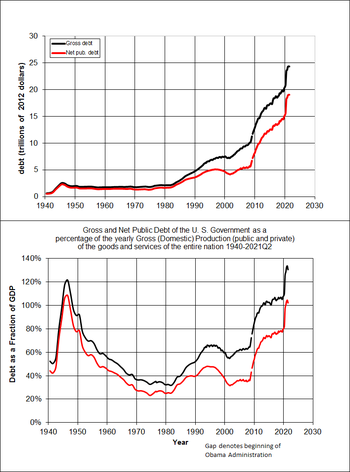 First look at the relative debt growth of Congress over time, the second chart.
 Zero Hedge exposes this great Morgan Stanley chart.
Comparing the two we see that government debt is the likely culprit. Regulation will not help, as long as government keeps this debt we will be volatile.
Kelly builds a franchise
A great Bloomberg article on near term interest futures. Interest futures increasingly bet on a near term interest rate increase, then capitulated. Now the futures predict lower interest rates farther out. In a queuing view, what just happened is investors holding out for a return to competition became increasingly disappointed, and begin to buy Kelly trades retail. In other words, the Kelly trades are seeking economies of scale by production line. Relating this to Shannon Channel theory consider a Huffman coder that begin to see a pattern and adds a second layer of detector to recode that pattern.
Remember that increasing the stages of production mean expanding the operating points on the yield curve, an inflation, in this case an inflation of the Kelly trades. Longer term bets are made with smaller lot sizes. Some Kelly bets will be made for the next longest term, the five or seven year term. The jump is not linear, and only three terms seem to be independently operating at the moment. So, as the Fed gets moves toward a 50/50 gamble, then the Kelly system will suddenly deflate, with volatility at the long tem rate.
Remember that increasing the stages of production mean expanding the operating points on the yield curve, an inflation, in this case an inflation of the Kelly trades. Longer term bets are made with smaller lot sizes. Some Kelly bets will be made for the next longest term, the five or seven year term. The jump is not linear, and only three terms seem to be independently operating at the moment. So, as the Fed gets moves toward a 50/50 gamble, then the Kelly system will suddenly deflate, with volatility at the long tem rate.
Gold and a negative employmemt report
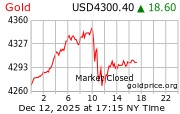
The employment report came out and the Gold bugs didn't like it. Then an unexpected inventory rise reversed the negatives. All a sign of uncertainty.
Subscribe to:
Posts (Atom)