Tuesday, April 22, 2014

Geavitational Waves and light doing the swirl, again

Detecting Spacetime Distortions
It’s rare that a new discovery can stop an astrophysicist in their tracks and leave them lost for words. We’re used to media hype around results that are not really all that big a deal, and usually, by the time something hits the news, it’s already been digested (and often dismissed) by the astrophysics community. The BICEP2 detection of primordial gravitational waves, though -- that was different. It completely rewrote the agenda for every journal club, group meeting, hallway conversation, and seminar series for a week.

Gravity does indeed wave, I know because the L1 Lagrange points stay with us when we orbit the Sun. Unless you believe that gravity travels faster than light, you have no choice but to call these waves.

The reason physicists hesitate to call this wave motion is because they have the complete sequence, they know the start and end.  Simply because physicists cannot locate the complete sequence all the time does not make a new theory of physics, it just makes their equations approximate. But that's OK, just watch your Taylor series expansions, when they don't converge uniformly then pull out the Einstein correction table and make a small adjustment.

Michelson and Morley proved the opposite

WHAT CAUSES TIME?IF WE KNOW THE CAUSE OF SLOWING OF TIME WE CAN POTENTIALLY KNOW THE CAUSE OF TIME
There are however many problems with assigning structure to space. Number one being the Michelson and Morley's experiment which
showed the surprising finding that speed of light is a constant.
Other obvious major problem is how can huge masses like earth pass through
space without any resistance. There is a beautiful solution to this conundrum if we understand that the expanding space is cause of all motion and forces in the universe.
The constant speed of light shows there is indeed strcuture in the vacuum. Mickelson and Morley showed also that this structure is everything. How can space expand if it has no structure?

Humans simply over dimensionalize their equations.  It confuses the physicists. This author wants to explain time, here is a simple explanation, time is about 10e40 samples of the vacuum, mostly taken in the proper sequence except the vacuum has a bit of noise.

Just do GR with different variable seems to be the pattern

Here the idea is that different regions of space move differently from others and when each region of the universe extrapolates the effect, each region will have the illusion of expansion. These theories are all about changing the reference variables. Einstein simple rewrote the equations with respect to gravity and space impedance. I just wrote them with respect to a stupid little unit of vacuum. 

In other words, my approach is to find the smallest 'kernel' of vacuum that maximizes entropy over the all of the equations of physics. The equations of physics are a finite set, so whenever my little vacuum kernel broke a rule, I went back and changed it. Eventually my kernel matched the equations.


The Accelerating Universe and Dark Energy Might Be Illusions
Now, a new theory suggests that the accelerating expansion of the universe is merely an illusion, akin to a mirage in the desert. The false impression results from the way our particular region of the cosmos is drifting through the rest of space, said Christos Tsagas, a cosmologist at Aristotle University of Thessaloniki in Greece. Our relative motion makes it look like the universe as a whole is expanding faster and faster, while in actuality, its expansion is slowing down just as would be expected from what we know about gravity.
If Tsagas' theory is correct, it would rid cosmology of its biggest headache, dark energy , and it might also save the universe from its harrowing fate: the Big Rip. Instead of ripping to bits, the universe as Tsagas space-time envisions it would just roll to a standstill, then slowly start shrinking.
Cruising through space-time
Tsagas' alternative version of events, detailed in a recent issue of the peer-reviewed journal Physical Review D, builds on a recent discovery by Alexander Kashlinsky, a cosmologist at NASA's Observational Cosmology Laboratory. In a series of papers over the past three years, Kashlinsky and his colleagues have shown that the huge region of space-time in which we live a region at least 2.5 billion light-years across is moving relative to the rest of the universe, and fast. [Did the Universe Begin as a Simple 1-D Line? ]

Mass is expanding says this physicist

Cosmologist claims Universe may not be expanding
In a paper posted on the arXiv preprint server1, Christof Wetterich, a theoretical physicist at the University of Heidelberg in Germany, has devised a different cosmology in which the Universe is not expanding but the mass of everything has been increasing. Such an interpretation could help physicists to understand problematic issues such as the so-called singularity present at the Big Bang, he says.
Hey, he noticed something:
But, as Wetterich points out, the characteristic light emitted by atoms is also governed by the masses of the atoms' elementary particles, and in particular of their electrons. If an atom were to grow in mass, the photons it emits would become more energetic. Because higher energies correspond to higher frequencies, the emission and absorption frequencies would move towards the blue part of the spectrum. Conversely, if the particles were to become lighter, the frequencies would become redshifted.
This is not true:
The idea may be plausible, but it comes with a big problem: it can't be tested. Mass is what’s known as a dimensional quantity, and can be measured only relative to something else. For instance, every mass on Earth is ultimately determined relative to a kilogram standard that sits in a vault on the outskirts of Paris, at the International Bureau of Weights and Measures. If the mass of everything — including the official kilogramme — has been growing proportionally over time, there could be no way to find out.
We can count mass up, just like nature does. Just change the units to "thing counted up"

Here is a careful physicist:
Others say that Wetterich’s interpretation could help to keep cosmologists from becoming entrenched in one way of thinking. “The field of cosmology these days is converging on a standard model, centred around inflation and the Big Bang,” says physicist Arjun Berera at the University of Edinburgh, UK. “This is why it’s as important as ever, before we get too comfortable, to see if there are alternative explanations consistent with all known observation

Then what is the true impedance of free space?

A very low number.

It is determine by the Compton match of the range over which light emission is supported. For EM wave I get:

impedance = 2* sqrt(Mass ratio * freq ratio)

Which is likely  inaccurate, but close enough.   The ratios are taken from the electron to the proton for mass ratio. Why the Mass ratio? Not really needed, but I left it as I am not sure.

 For the vacuum it is very close to zero.


Is light quantized?

At the source, but it is matter that is packed at specific ratios. The Compton effect is fundamental, there is always a wave/mass relationship, either mass itself, or mass + wave kinetic energy, both quantize together.

Scientists say light maintains its frequency through free space because its energy is quantized and unchangable, except for red shit which is a frame problem.  But that theory assumes the impedance of free space is constant.

But the idea that an electron orbit determines the quant of a photon is hard to believe if you believe in unchangeable light quanta.  Why would a photon accept a particular form arbitrarily chosen, then keep that form?

Most of the explanation for the dual nature of light is simply explained by the source and destination of light in terms of energy quants, not necessarily intrinsic to light motion.
Einstein said:

Although he accepted the validity of Maxwell's theory, Einstein pointed out that many anomalous experiments could be explained if the energy of a Maxwellian light wave were localized into point-like quanta that move independently of one another, even if the wave itself is spread continuously over space.[5] In 1909[40] and 1916,[42] Einstein showed that, if Planck's law of black-body radiation is accepted, the energy quanta must also carry momentum p=h/λ, making them full-fledged particles
Sure, but that assumed the vacuum itself is not quantized, a basic assumption Einstein made at one time. Then, as we saw, Einstein says the vacuum has energy, a quant of it. So, then free space cannot be a blank slate. Relativity does not explain the contradiction.

So the red shift theory says that these should not be considered quanta, and energy is conserved because the blue shift at the source and the redshift at the destination maintain energy. But if light is not quantized, then what happens to beam spread over distance?
The intensity (or illuminance or irradiance) of light or other linear waves radiating from a point source (energy per unit of area perpendicular to the source) is inversely proportional to the square of the distance from the source; so an object (of the same size) twice as far away, receives only one-quarter the energy (in the same time period).
Look long enough and you will collect enough energy to measure frequency, they say..

Then you have a conundrum, the impedance of space is everywhere a scalar but distance is not, and  time expansion has no effect on impedance?  That rules out space time expansion I would think.  Impedance can be a a vector, and still maintain the speed of light if one accepts that frequency changes.

It is the same conundrum Einstein reported with the vacuum noise, either it changes with spacetime or energy is created some how. And, if the vacuum has an energy quant then how is impedance everywhere constant, regardless of energy quant? Further more, if impedance is a scalar, then how can light have vector momentum?

What about Planks constant in space?

They imply that the rate of change of magnetic and electro is always constant, regardless of field strength of the light. Then that rules out the Plank's constant for the vacuum of space.

But wait, you say, the impedance has more time to be impedance as the frequency changes. Well that rules out the idea that impedance is a scalar, right?

But wait, you say.  The light itself holds the vector, but impedance is a scalar.  Hard to believe that light energy can contain a vector but relies on space to maintain impedance, regardless of direction or frequency.

No where is there any metion of space time expansions effect on the impedance of space. Yet, here we have gravity, a vector with a constant value relative to local energy.  It warpds space time but leaves impedance alone? How nice.

The physicists of our time are accurate

Damn accurate.  They do work to the edge of the SNR of the vacuum of space.  But the vacuum of space is damn accurate.  Physicists, and the vacuum, minimize phase imblance, and they both operate to the limit in todays world.

Hence, I hesitate to look much closer to the red shift, because I think both sets of vacuum are near perfection. I am not close enough to decide.

And the forces of gravity and beyond. The separation of groups is vanishingly small in quantum terms. It is hard, maybe impossible for either us or the vacuum to distinguish the continuous from the quantum view.

The lifetime of a proton? Amazingly accurate to pack the thing, and amazingly accurate to estimate its decay rate.

Monday, April 21, 2014

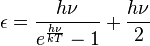
Max Plank and another Shannon entropy relationship

 In Qubits: (hv/kT) = log(1+hv/e)
In bits: (hv/kT) = log(1+hv/E)/log(2)


This is the quant size of the vacuum noise. Einstein and Stern added a term:
Becomes (hv/Kt) = log(1+hv/(E-hv/2))


Both quant  and SNR look like energy?  Yes, but the exponents of the base have a factor (1/2) which represents twice the sample rate, and thus, the square root of energy. So they are normal.  They both use frequency to quantize light. They use Boltzmann's constant and set bandwidth by that, the sample rate becomes Temperature. But fell free to dump those units and replace speed of light with sample rate of light.

kT really takes a probability function multiplied by the number of elements to give you a band limit, and means: Sampled at twice that rate.

Kinetic energy is noise, signal is potential energy. Einstein added enough noise so it fails the Shannon test. When it passes the Shannon test, then it can be broken up into sub channels and make a twos system. Otherwise we can make it a natural log digit system, but group operations are a bit complicated. I need to look into stochastic algebras, but no doubt they mean that numbers have to tiny little matrices, which I expected.

I have a hard time finding my error here

  • We know we operate at maximum (Shannon) or near maximum (Hyperbolic) entropy functions.
  • My quant ratios seem to be fitting all the major constants of physics, they define the Shannon potential boundaries.
  • Group theory tells us what are the valid integer sets along out invariant frame axis.
  • I can mark any subset of integers with my Shannon operator and the boundaries, my Hamiltonian is my SNR. 
  • I can sub select the integers that meet group theory.
  • I can substitute my hyperbolic for the Shannon and draw my orbitals.

Where have I gone wrong?


2216, Space impedance of a Higgs/Gluon wave

Ultra high frequency. If a quasar has reached the Higgs wave limit, then all the quants are packed and extra energy is spilling from the top end and massive high energy Gluon-Higgsonic waves are shooting  up and out, and likely quantizing into matter when they exit the event horizon. The quasar is redistributing kinetic energy, and nulls.

I know the Higgs wave number is likely 107 on my chart, and evidently the physicists agree. So I pick off the mass number and look up the mass quant ratio from Quark to Higgs (127 - 108), convert to Compton mass, and that tells me how much free nulls can be transported by the wave.  But how much free nulls will it carry?  Hard to tell, there is no control similar to what the proton does. Nulls are signal, wave is noise. There is mostly too much signal around the quasar, this may be the thing that stops the expansion. The Higgs should be able to carry a whole quant chain of Nulls. Once out of its boundary, I doubt there i anything in free space that can provide a minimum phase path. It should just spread. A wave leaving the center of compaction is harmonic with the kinetic energy of the compacted point, like an antenna. This is different than a wave entering a region where it is not harmonic.

The next possible wave up from Higgs is 165, 60 order up. But at that point we are well beyond the density of the vacuum. So we always reach a limit, there is always a wave that how more power than its gravity.

Beam me up Scotty!

The vacuum catastrophe?

Where does the vacuum get all that energy to support the Higgs?

I never though that was the catastrophe, I put it another way. How did the universe get so much phase inbalance packed into those tiny spaces to begin with? I think the Higgs is as reasonable as the proton, and that peak in my spectral chart is likely it.  But that peak is build from the vacuum thru stages, it does not get filled directly.

I have the same catastrophe, just a change of variables.  The answer seems to me a cyclic universe, one in which the vacuum gets near perfect entropy, then things fall apart and restart.  The packing of nulls only means that the vacuum noise is less than some energy concentration sufficient to make matter and sparsity. As long as the SNR of the vacuum is greater than .5, I think, it will pack something, but the complete sequence will be very long. Put it this way. If the current sequence is 11111110, and the SNT is high enough to see the last bit and there is enough excess kinetic energy, then we will get at least on bit of the highest order.

The Higgs prediction, order 107, simply tells me the normal density of space.   That is amazing accuracy, too much for me.  The vacuum noise mut be closer to 2 to 4  orders, but I am not sure.  I start with three vacuums and ask myself, how many fake packed Nulls must the vacuum make before is adjusts the sample rate of light, such that it will not erroneously make another packed null set.

But, still, how does all those nulls get separated out from phase?  Where did the initial energy come from?   If the initial energy is simply the volume difference between negative and positive phase, then who made the vacuum? All theories fail with the starting point problem.